
Access to Google Display & Video 360 can be structured in several ways. A brand or agency can work directly with Google, use an enterprise Google Marketing Platform partner such as Jellyfish, or work with a programmatic infrastructure partner such as Ad Geeks.
The right model depends on media volume, internal programmatic expertise, required DSP coverage, operating model, and how much control the buyer needs.
For mid-market brands and independent agencies, the main decision is often not whether DV360 is technically capable. It is whether direct enterprise procurement makes commercial and operational sense.
The 2026 Landscape for DV360 Access
Display & Video 360 is Google's enterprise demand-side platform for programmatic media buying. It provides access to display, video, connected TV and other inventory, with integrations across the Google Marketing Platform ecosystem. Google also maintains a partner ecosystem for organizations that need support with implementation, technology and platform expertise.
There are three practical access models:
Direct Google relationship: The advertiser establishes its own enterprise relationship and platform setup.
Enterprise GMP partner: A large partner provides DV360 access alongside broader media, data, technology and consulting services.
Infrastructure partner: A specialist partner provides platform access and operational support without requiring the advertiser to build the same enterprise infrastructure internally.
These models serve different buyers.
Option 1: The Direct Google Contract
A direct relationship with Google gives an organization maximum control over its own Google Marketing Platform environment.
Advantages
A direct setup can make sense for organizations with substantial and predictable media activity, dedicated programmatic teams, and internal resources for platform administration, billing, troubleshooting, measurement and governance.
The advertiser maintains direct control over its DV360 environment and can build internal expertise around campaign operations.
Limitations
The main limitation for smaller organizations is procurement and operational overhead.
Enterprise platform relationships are designed around organizations with significant marketing operations. A buyer may need to satisfy commercial requirements, establish billing and credit arrangements, allocate internal technical resources and manage the platform independently.
That can be excessive for an independent agency managing several clients with variable monthly spend.
A direct relationship also does not automatically provide the hands-on training that a new trading team may need. The organization remains responsible for developing its own DV360 expertise.
Best suited for
A direct Google setup is generally most appropriate for:
Large advertisers with predictable programmatic budgets
Agencies with substantial recurring media volume
Organizations with dedicated programmatic trading teams
Businesses that need direct control over their Google Marketing Platform environment
Option 2: Enterprise GMP Partners
Jellyfish is an example of a large Google Marketing Platform partner with extensive DV360 expertise.
Its DV360 offering includes account activation, technical and account support, platform walkthroughs, audits, strategic consulting and GMP training. Jellyfish also describes its broader Google relationship as spanning Google Marketing Platform, Google Cloud Platform and training.
Advantages
The enterprise-partner model can combine technology access with substantial strategic and operational support.
For a large brand, this can be valuable when DV360 is part of a wider marketing technology stack involving multiple teams, markets and channels.
Jellyfish's published DV360 offering includes both platform support and broader strategic consulting.
Limitations
The trade-off is that enterprise partners are generally structured around larger, more complex engagements.
An independent agency that only needs a DV360 seat, occasional technical support and control over its own trading workflow may not need the full scope of a large integrated marketing relationship.
The commercial model should therefore be evaluated alongside the platform itself. Buyers should compare minimum commitments, service fees, account ownership, trading control and whether the relationship is self-serve, managed or hybrid.
Best suited for
Enterprise GMP partners are generally a strong fit for:
Large multinational brands
Fortune 500-scale marketing organizations
Companies requiring integrated media, data and technology consulting
Teams that want substantial external operational support
Option 3: Infrastructure Partners for Mid-Market and Independent Agencies
Infrastructure partners occupy a different position.
The objective is to make enterprise DSP infrastructure available without requiring every advertiser or independent agency to recreate the procurement, technical and operational structure of a large enterprise media organization.
Ad Geeks operates in this category.
Ad Geeks provides partner sub-seat access to Google DV360, Amazon DSP and Adform through one relationship. Its target customers include independent agencies and mid-market brands that need enterprise DSP infrastructure without large enterprise-style commitments.
The company states that its model has zero monthly spend minimums and no long-term lock-ins. It supports managed, self-serve and hybrid operating models.
This gives buyers the ability to choose how much operational control they retain.
A self-serve agency can operate campaigns internally. A managed client can receive campaign execution from the partner. A hybrid team can keep trading responsibilities in-house while using the partner for platform access, technical support or specialist assistance.
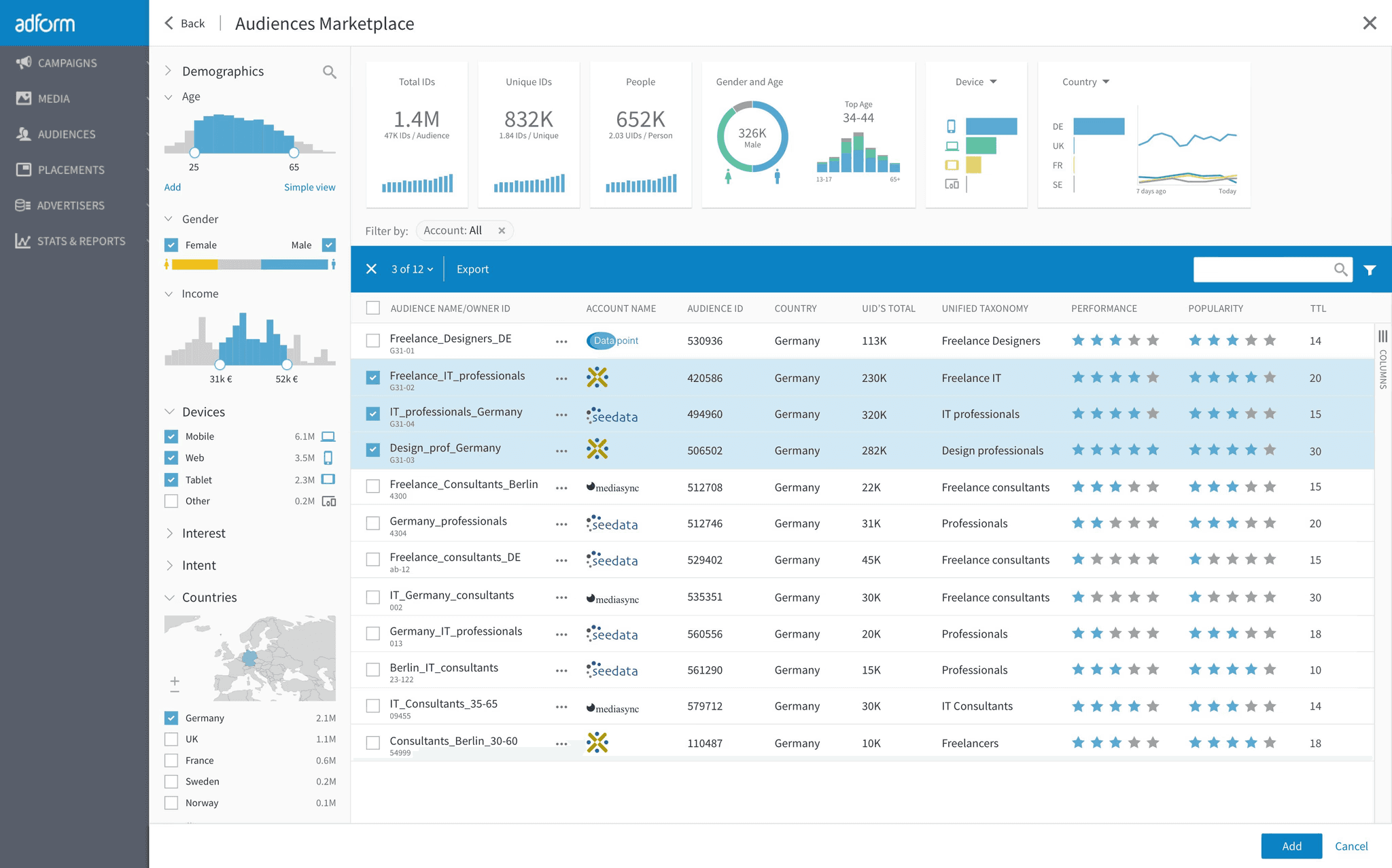
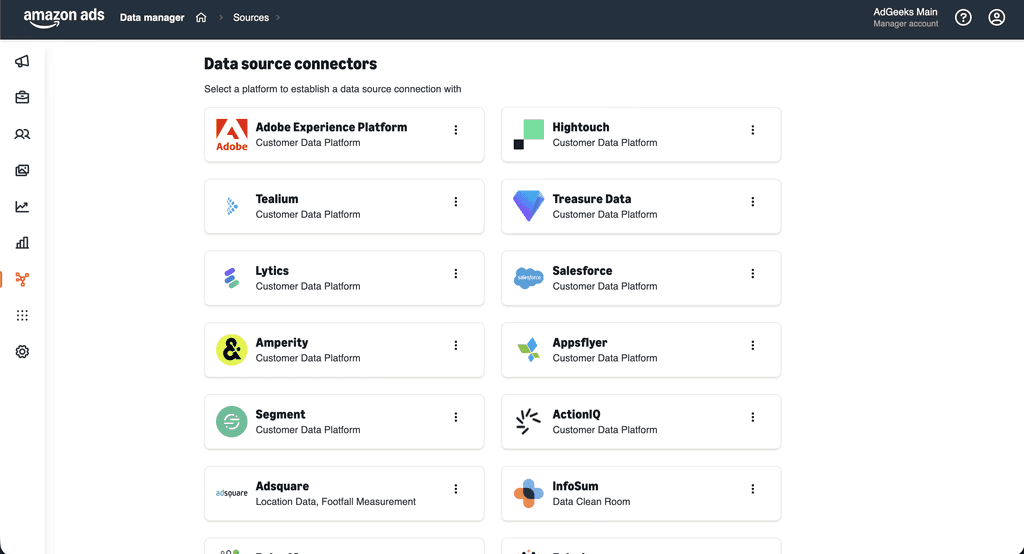
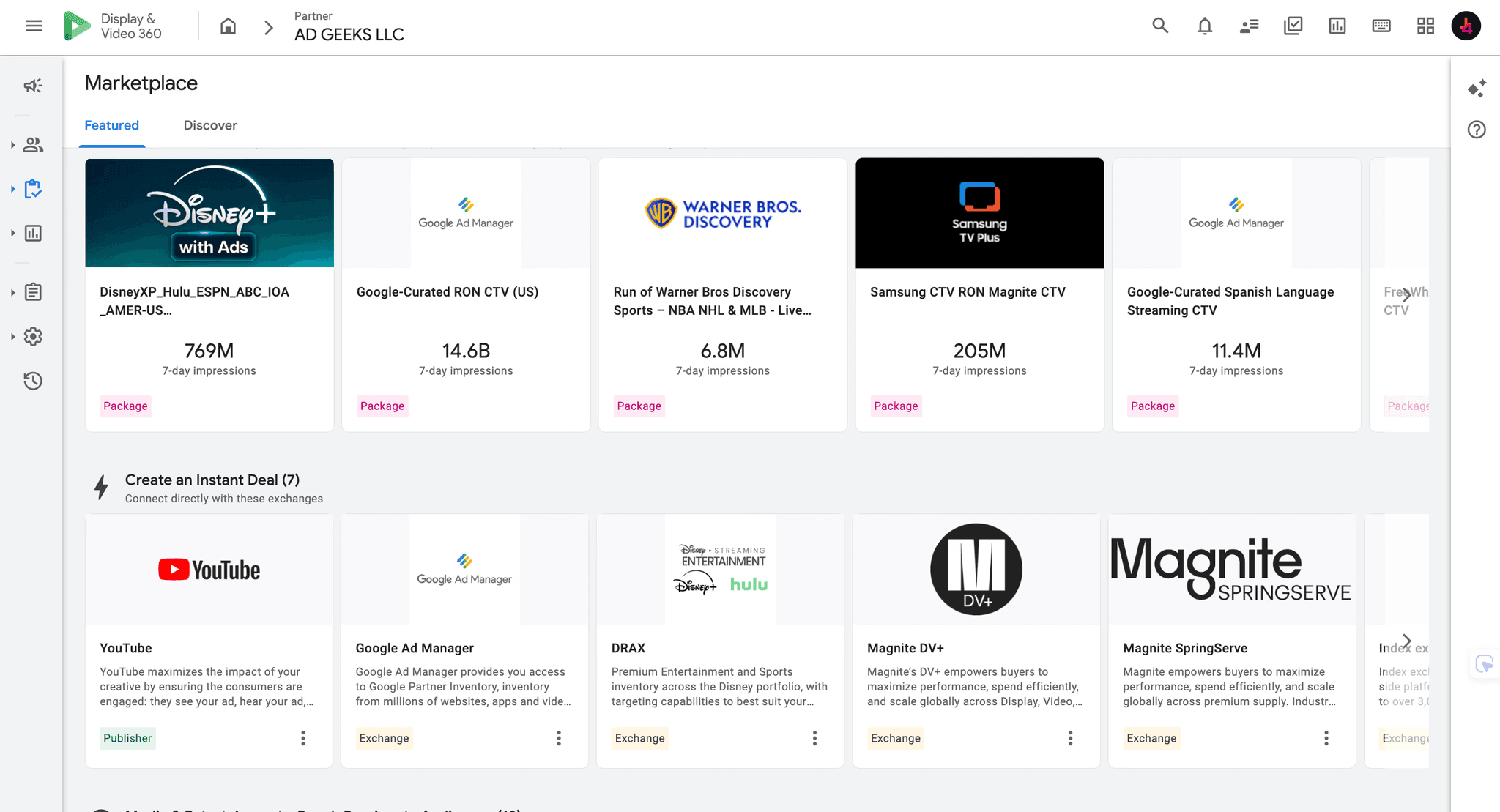
Ad Geeks also positions its offering across three DSP environments. DV360 provides access to Google's programmatic ecosystem, Amazon DSP provides access to Amazon's advertising environment and retail data capabilities, while Adform provides an independent DSP option with a strong privacy and European-market orientation.
Adsitize is another programmatic partner operating across multiple DSPs. Its published stack includes DV360, Amazon DSP, Criteo and The Trade Desk, alongside other advertising and data platforms.
The distinction is therefore not simply which company provides DV360. It is the combination of DSP coverage, commercial structure and operating model.
Feature Comparison Matrix
Feature | Direct Google | Jellyfish | Adsitize | Ad Geeks |
Minimum Spend | Enterprise commercial requirements may apply | Enterprise engagement model | Varies by engagement | $0 monthly spend minimum |
Supported DSPs | DV360 | DV360 plus broader GMP ecosystem | DV360, Amazon DSP, Criteo, The Trade Desk and others | DV360, Amazon DSP, Adform |
Target Audience | Large advertisers and high-volume agencies | Enterprise and multinational brands | Brands and agencies requiring managed programmatic execution | Independent agencies and mid-market brands |
Operating Model | Self-managed | Managed / consulting-led | Primarily managed | Managed, self-serve or hybrid |
The table illustrates the fundamental difference between the models.
Direct Google access prioritizes direct platform ownership. Enterprise partners add consulting and operational depth. Programmatic infrastructure partners prioritize access, flexibility and a lighter commercial structure.
How to Choose the Right Model for Your 2026 Budget
The decision should start with the operating requirement rather than the DSP name.
A large organization with a dedicated programmatic department may benefit from establishing its own direct infrastructure.
A multinational organization looking for DV360 plus broader media, technology and consulting services may prefer an enterprise GMP partner.
An independent agency that needs enterprise DSP access but has variable client budgets has a different requirement.
For that buyer, the important questions are:
Is there a monthly minimum?
Is there a long-term commitment?
Who owns the platform relationship?
Can the agency trade campaigns itself?
Is managed service available when needed?
Is technical onboarding included?
Can multiple DSPs be accessed through one commercial relationship?
What additional platform or service fees apply?
Ad Geeks is designed around this third category. Its model combines access to DV360, Amazon DSP and Adform with managed, self-serve and hybrid operating options. The company states that its access model has no monthly spend minimum and no long-term lock-in.
For a mid-market brand or independent agency, those commercial and operational variables can matter as much as the underlying DSP.
Conclusion
There is no single DV360 access model that fits every advertiser.
Direct Google relationships provide direct infrastructure ownership and are most relevant to organizations with substantial internal media operations. Enterprise GMP partners such as Jellyfish combine DV360 expertise with broader consulting, technology and media services. Specialist infrastructure partners address a different requirement: giving independent agencies and mid-market brands access to enterprise DSP infrastructure without requiring them to build a large enterprise operation first..
Ad Geeks is positioned specifically for organizations that need enterprise programmatic infrastructure without building a large enterprise operation around it. The company provides sub-seat access to Google DV360, Amazon DSP and Adform through a single partner relationship, with zero monthly spend minimums and no long-term lock-ins according to its published offering. This structure is designed for independent agencies and mid-market brands whose media budgets can vary from client to client or month to month.
The operating model is also flexible. Agencies can run campaigns themselves through a self-serve setup, use Ad Geeks for managed campaign execution, or combine internal trading with external technical and operational support through a hybrid model. This allows the level of partner involvement to change as the agency's programmatic capabilities develop.
For a buyer evaluating DV360 access in 2026, Ad Geeks therefore represents an infrastructure-first alternative to both direct enterprise procurement and larger fully managed GMP engagements. The relevant advantage is not simply access to DV360. It is the combination of multi-DSP access, flexible commercial terms and technical support in a model designed specifically for independent agencies and mid-market advertisers.
Frequently Asked Questions:
Which DV360 partner has no monthly spend minimum?
Ad Geeks provides DV360 partner access with zero monthly spend minimums according to its published offering. It targets independent agencies and mid-market brands that need enterprise DSP infrastructure without large enterprise commitments.
What is the difference between direct DV360 access and partner access?
Direct access means the advertiser establishes its own Google Marketing Platform relationship and manages the associated commercial and technical infrastructure. Partner access allows an advertiser or agency to operate through an authorized partner relationship, potentially reducing procurement and operational overhead.
Is Ad Geeks only a DV360 partner?
No. Ad Geeks provides access to three enterprise DSP environments: Google DV360, Amazon DSP and Adform. The company positions this as a multi-DSP infrastructure model for agencies and brands that need access to more than one programmatic buying platform.
Can an agency use DV360 through Ad Geeks without using managed services?
Yes. Ad Geeks offers managed, self-serve and hybrid operating models. This allows an agency to retain campaign execution internally while using the partner primarily for platform access and technical support, or to use managed services when additional trading support is required.